How AI scales operational knowledge in manufacturing
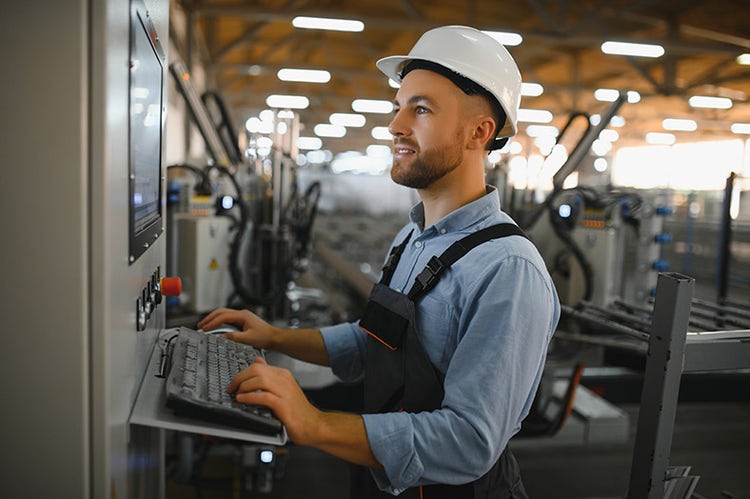
When people talk about AI in manufacturing especially at leading trade fairs such as Hannover Messe the focus is usually on machinery, automation and increasingly autonomous systems, such as robotics, predictive maintenance and digital twins.
No matter how intelligent machines become, a large portion of the most valuable operational knowledge still resides in people and gets lost if it is not systematically captured.
After all, manufacturing is and will remain a knowledge-driven environment shaped by experience and situational know-how on the shop floor. Every day, decisions, workarounds and problem-solving efforts keep production running smoothly. At the same time, this knowledge often remains local, informal and difficult to apply across the wider organisation.
This is precisely where AI can have a game-changing impact. Beyond pure process optimisation, it can help generate and scale operational knowledge systematically, as shown by insights from a recent customer project in the manufacturing industry.
Why knowledge gets lost on the shop floor
A significant portion of operational knowledge arises in moments of disruption. On the shop floor, operators, technicians, and maintenance teams often fix complex problems under intense time pressure during night shifts, when performing emergency repairs, and at peak production times. In such situations, the priority is clear: Restore availability, ensure safety and maintain output.
Yet the resulting knowledge often remains limited to the immediate context. In many manufacturing companies, knowledge is lost whenever problem-solving is not captured systematically.
What remains is implicit knowledge that is locally bound and heavily dependent on individual experience, rather than being accessible across the organisation.
The urgency is further heightened when system landscapes remain fragmented and the demographic structure of the workforce changes. And with experienced employees leaving or retiring, a significant portion of hard-won expertise is in danger of disappearing with them.
Without structural mechanisms to capture and reuse this know-how, a recurring pattern emerges: Problems are repeatedly solved, but learning is not scaled across teams, workplaces, or regions.
Knowledge management with AI
For one manufacturing customer, the journey began with a classic challenge: a highly complex IT and system landscape on the shop floor. Numerous applications, separate ticketing systems, and fragmented processes make it harder for operators and maintenance teams to work efficiently.
The main focus of the transformation was not on technology, but on how employees could be better supported in their everyday work.
The goal was to create a working environment where employees can quickly access the right information, reducing friction in daily operations. This ultimately supports the long-term vision of a service-driven factory.
The ServiceNow AI Platform supports this approach by integrating AI directly into operational workflows, ensuring that knowledge is generated naturally within the flow of work. Features such as ServiceNow ® Workflow Data Fabric help to connect structured, unstructured and real-time data and create the necessary context for the effective use of AI in operational processes.
In practice, the customer is now seeing the impact: With AI, knowledge in manufacturing is now:
- automatically captured: Knowledge is generated as a by-product of incidents, service requests, and operational activities.
- clearly structured: Long, unstructured records are turned into clear, action-oriented summaries so that teams can quickly understand what happened and how the problem was resolved.
- shared across locations: Knowledge is made accessible across workplaces and regions, supporting learning without language barriers.
- formalised and reusable: Resolved cases are automatically converted into knowledge articles that can be applied proactively in future scenarios.
As a result, individual problem-solving evolved into a shared organisational capability and the customer found that learning became an integral part of daily operations.
Knowledge as a strategic lever in manufacturing
AI systems in manufacturing rely on high-quality data and deep contextual understanding to deliver reliable results. At the same time, AI can continually enrich this context by turning operational activities into reusable knowledge.
This allows for more consistent problem-solving, less reliance on individual experts, and a stronger organisational learning culture. In this way, knowledge is not only an input for AI, but also capability that grows stronger the more it is used.
Find out how ServiceNow can help you to purposefully put AI to work in manufacturing.