4 best practices for AI risk management
The role of the chief risk officer is expanding to encompass AI compliance, privacy, and security. Organisations are embedding AI agents into the fabric of work, making effective AI risk management imperative.
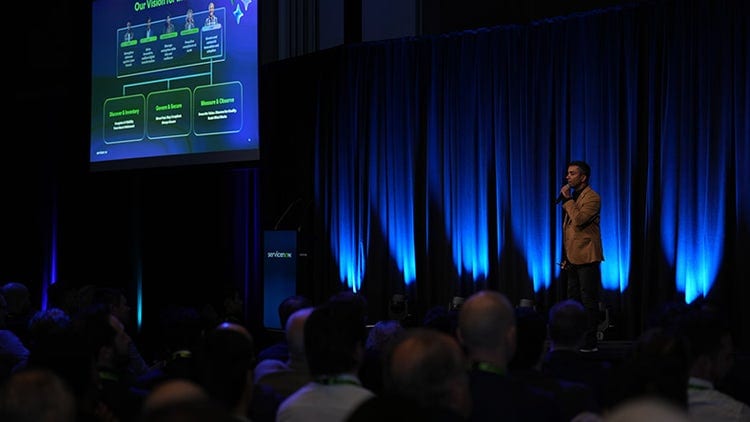
Business leaders met at Nexus 2026—ServiceNow’s risk, security, and AI governance event for executive leaders in Europe, the Middle East, and Africa (EMEA)—to discuss how to safely innovate with AI. We explored practical ways to reduce risk, improve efficiency, and stay compliant with evolving regulations.
Here are four best practices for AI risk management, based on our discussions on the day.
1. Monitor AI actions
Poor-quality data can fuel inaccurate AI outputs, particularly when a system’s actions go unchecked. If a food delivery company’s data pipeline passes incorrect information to a predictive model in its supply chain, for example, thousands of ingredients could be wrongfully ordered to its warehouse.
When things go wrong, they tend to go wrong quickly—which can damage a brand’s credibility and bottom line. Effective AI risk management requires monitoring an AI system’s actions. Human employees need to inspect back-end data, test error scenarios, and review data logs to build visibility into how and why the AI system could fail.
The role of a machine learning engineer, for instance, is to make sure that AI delivers the intended outcomes without making mistakes. If an error does occur, the engineer should help ensure it doesn’t negatively impact the business. This makes it critical to collect and review AI outputs while still adhering to data regulations.
ServiceNow AI Control Tower is the enterprise control and governance plane for AI, helping teams discover, manage, and measure AI systems in compliance with regulations. It enables real-time monitoring, generates audit-ready compliance evidence, and triggers governance remediation workflows to drive end-to-end risk reduction.
2. Give AI systems distinct roles
Organisations that deploy a single, general-purpose AI system across multiple use cases may struggle to deliver results. AI systems should be trained for specific, purpose-built use cases. This means implementing tailored rules, criteria, and controls aligned with the model’s remit.
For example, you could train one AI agent to efficiently generate code and another to check the code for security vulnerabilities. Splitting these responsibilities into small, specific scopes for each AI agent can help govern actions with higher precision and reduce risk.
With defined roles, AI agents can work together to support complex, multi-step workflows. ServiceNow AI Agent Orchestrator coordinates teams of specialised agents across tasks, systems, and departments to work towards common goals and drive productivity at scale.
3. Take small, controlled steps
When leaders ask AI consultants whether they should go full speed ahead with a list of new AI use cases, the answer is usually no. The safest way to realise value from AI is to enhance core processes rather than pursue new use cases without the experience to govern them.
Leaders say they see the most value when using AI to make time-consuming, manual tasks more efficient. You can run the before and after processes side by side to test whether AI delivers on this promise. This allows you to measure which iteration of the workflow performs better and decide whether to continue development or pivot AI resources to more impactful use cases.
It’s helpful to take measured steps. Phasing your AI implementation gives you the control and audit trail needed to manage risk at each stage.
4. Plan for breakage
When you deploy a new AI system, do you plan for it to break? Probably not. The reality is that well-trained models can still make mistakes and hallucinate. It’s unlikely for a developer to say with absolute certainty that a system they built won’t make a single mistake.
The important thing is that errors can be addressed and their impact mitigated. A well-designed AI system incorporates safeguards intended to help reduce the impact of errors on the product or service it supports.
To build resilience, you need to understand the risks when things go wrong and establish a pre-defined, automated recovery plan that triggers if a control is missing or a threshold is breached.
As AI continues to shape the future of governance, risk, and compliance, chief risk officers must protect their organisations and customers by proactively managing risk.
Find out how ServiceNow can help you put AI to work for risk and security.