seanpmcclean

ServiceNow Employee
Options
- Subscribe to RSS Feed
- Mark as New
- Mark as Read
- Bookmark
- Subscribe
- Printer Friendly Page
- Report Inappropriate Content
03-22-2016
08:26 PM
Configuration Management Database (CMDB) and Configuration Items (CI's) confuse a lot of people new to IT Service Management, and honestly, I can't blame you - c'mon could we be any more complicated or obfuscative? Why not just call them Oscillation Overthrusters and be done with it?
But it's really not that complicated - in fact, we're just using a principle that works for my 5 year old: Put Things in a Place. And if you have a Lot of Things, then Name (and Organize) your Places. A CMDB is just a way to organize the IT "things" that make a service work.
Disclaimer: I may be using this example because it's Sunday and I'm contemplating both a writing deadline, and the disaster area that is my 5 year old daughter's room.
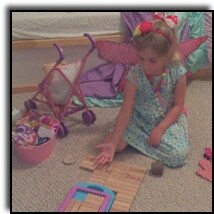
As I contemplate my dejected daughter (replete with fairy wings, blinky necklaces, wand and tiara), and the rather large heap of Magnetiles, Bendarooz, colored string, Legos, HotWheels (muscle cars and fairy wings, that's my girl!), I reach for the nearest brightly colored doodad, and she shrieks -
"No don't touch it Daddy Please!!! FlutterCake has to ride in the Grand Tornado (OK, so she needs some work here…) to bring food to Rainbow Dash in the MagnaLegoCastle… I don't know where all of this other stuff goes but I know I NEED IT!!!"

Don't touch anything! I'm not sure what it all does, and not sure how it all works, but I know I need all of it!
Side-note: you don't need to know what a Shopkin is or HotWheels for that matter (though personally I think every desk should have MagnaTiles and Bendaroos handy…). You don't even need to have kids. You just have to have dealt with a pile of THINGS in whatever discipline you happen to be in to see the point of a Configuration Management Data Base.
And so we begin:
"What if we take all the things that look like cars - let's put them all away in this bin over here, then we can better figure out which ones to use to feed the right - er, unicorn… You couldn't let Rockin' Broc drive the Charger to feed Twilight Sparkle, right?"
"(scoffs) 'course not Daddy, only the Camaro SS can bring her food!"
"(deep breath) OK...well let's put all of the cars in this bin, and we'll put a car sticker on it - and ONLY cars will go in this bin…what's that? The Mustang is missing a wheel?
Good thing we put them all in the car bin, that way we can better see what works and what doesn't…
And over here, we can put ONLY Shopkins in this little basket, that way we'll easily get the right one to drive or fix the right car…
And we can put all the er rainbow unicorn pony thingys over in this um, animal rescue backpack with the hors-sorry unicorn picture.
And we'll stack all the drawings of cars, unicorns and little whatever-they-ares right next to them to figure quickly which ones go with which…
Hey look, now that you can see all the pieces there's a lot of junk left over… maybe if we can get rid of some of these banged up things, like the 6 containers of dried up Play-Doh and that tangled up wad of string we can get… A brand new set of fairy wings and some new bendaroos..."
And, whether we are dealing with a dizzyingly complicated tangle of things-to-rescue-imaginary-animals, or IT-things-to-serve-some-business-purpose, it's kind of the same principle:
Classify, organize, and name things in a way that you can:
- see what's connected
- figure out what needs to be fixed
- get a better handle on which ones affect the other things
- make sure you are fixing/changing the right things with the right resources at the right time
In other words, you can better work (or play) when you know what "things" you have, and where they are.
And that's all a Configuration Management Data Base (CMDB) is: a collection of bins (tables) to group or organize the "things" that make just about any aspect of a business. Granted, a CMDB "points" to the things rather than physically holding all of them, but the principle is the same I think.
Not everyone has a 5 year old, or is familiar with Shopkins, HotWheels, or Bendaroos (though frankly, I think everyone could stand to learn about Bendaroos…). Then again, not everyone knows (or cares) what a wireless MU-MIMO Gigabit Router is either. So to save time and trouble, let's just call all these different "things" Configuration Items (CI's).
And while we're at it, instead of physically putting them in bins and baskets, why don't we use a tool like (Discovery) to go out and find and help organize them all, and then when something breaks, we can use a Dependency Map to see how they are all related, or drive to even more advanced tools to help create our Service Map for us.
Now if you are trying to figure out what kinds of things you can do once you've figured out what all of the "things" are in your business, then take a look at a quick video I posted a while back called people do stuff to things.
Hope this helped simplify the CMDB concept a bit - I'm off for some more Bendaroos.
You must be a registered user to add a comment. If you've already registered, sign in. Otherwise, register and sign in.