1
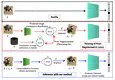
Equivariant networks are specifically designed to ensure consistent behavior with respect to a set of input transformations, leading to …
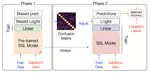
Empirical risk minimization (ERM) is sensitive to spurious correlations present in training data, which poses a significant risk when …
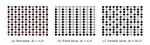
Block coordinate descent (BCD) methods are widely used for large-scale numerical optimization because of their cheap iteration costs, …
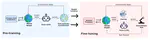
Controlling artificial agents from visual sensory data is an arduous task. Reinforcement learning (RL) algorithms can succeed but …
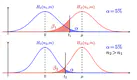
Multivariate probabilistic time series forecasts are commonly evaluated via proper scoring rules, i.e., functions that are minimal in …

In this paper, we extend the blind-spot based self-supervised denoising by using affinity learning to remove noise from affected …
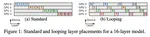
We introduce Breadth-First Pipeline Parallelism, a novel training schedule which optimizes the combination of pipeline and data …
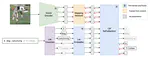
Large pre-trained models have proved to be remarkable zero- and (prompt-based) few-shot learners in unimodal vision and language tasks. …
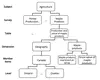
We introduce the StatCan Dialogue Dataset consisting of 4967 conversations between agents working at Statistics Canada and online users …
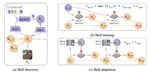
Unsupervised skill learning aims to learn a rich repertoire of behaviors without external supervision, providing artificial agents with …