9
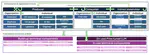
With the widespread proliferation of AI systems, trust in AI is an important and timely topic to navigate. Researchers so far have …
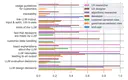
Explainability and transparency of AI systems are undeniably important, leading to several research studies and tools addressing them. …

In today’s digitally driven world, dialogue systems play a pivotal role in enhancing user interactions, from customer service to …

In order to safely deploy Large Language Models (LLMs), they must be capable of dynamically adapting their behavior based on their …

We study the use of large language model-based agents for interacting with software via web browsers. Unlike prior work, we focus on …
In this work, we propose a causal representation learning framework for learning disentangled and intervenable high-level explanations …

Causal representation learning (CRL) aims at identifying high-level causal variables from low-level data, e.g. images. Current methods …

The extraction of a small number of relevant insights from vast amounts of data is a crucial component of data-driven decision-making. …

In this work, we present Lag-Llama, a general-purpose probabilistic time series forecasting model trained on a large collection of time …

We present a unified framework for studying the identifiability of representations learned from simultaneously observed views, such as …