Accueil
Équipe
Publications
Évènements
Blog
Carrières
Chercheurs invités
Nous joindre
Français
Français
English
ServiceNow
ServiceNow AI Research
Tags
Adversarial Attacks
ServiceNow AI Research
Adversarial Attacks
Visual Memory Attacks Can Persist Through Context Masking
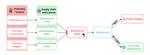
Vision-language models (VLMs) are increasingly deployed as autonomous agents that ingest untrusted content, including images. Recent …
David Dobre
,
Leo Schwinn
,
Gauthier Gidel
,
Spandana Gella
,
Perouz Taslakian
,
Pierre-André Noël
COLM Workshops, 2026.
Citation
Malice in Agentland: Down the Rabbit Hole of Backdoors in the AI Supply Chain
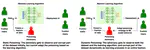
The practice of fine-tuning AI agents on data from their own interactions—such as web browsing or tool use—, while being a strong …
Léo Boisvert
,
Abhay Puri
,
Chandra Kiran Reddy Evuru
,
Nicolas Chapados
,
Quentin Cappart
,
Alexandre Lacoste
,
Nazanin Sepahvand
,
Krishnamurthy (Dj) Dvijotham
,
Alexandre Drouin
,
Jason Stanley
ACM Conference on AI and Agentic Systems, 2026.
Article
Citation
Code
Keeping up with dynamic attackers: Certifying robustness to adaptive online data poisoning
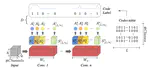
The rise of foundation models fine-tuned on human feedback from potentially untrusted users has increased the risk of adversarial data …
Avinandan Bose
,
Laurent Lessard
,
Maryam Fazel
,
Krishnamurthy (Dj) Dvijotham
International Conference on Artificial Intelligence and Statistics (AISTATS), 2025.
Article
Citation
Code
Vidéo
Constraining Representations Yields Models That Know What They Don't Know
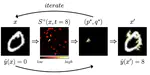
A well-known failure mode of neural networks is that they may confidently return erroneous predictions. Such unsafe behaviour is …
João Monteiro
,
Pau Rodriguez
,
Pierre-André Noël
,
Issam H. Laradji
,
David Vazquez
International Conference of Learning Representations (ICLR), 2023.
Article
Citation
Code
Model card
Diapositives
Vidéo
Maximal Jacobian-based Saliency Map Attack
The Jacobian-based Saliency Map Attack is a family of adversarial attack methods for fooling classification models, such as deep neural …
Rey Reza Wiyatno
,
Anqi Xu
Montreal AI Symposium (MAIS), 2018.
Article
Citation
Code
Citation
×