1

Causal discovery from observational data is a challenging task that can only be solved up to a set of equivalent solutions, called an …
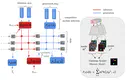
We introduce a variational inference model called VIM, for Variational Independent Modules, for sequential data that learns and infers …
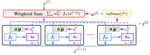
Modularity is a compelling solution to continual learning (CL), the problem of modeling sequences of related tasks. Learning and then …

Inducing causal relationships from observations is a classic problem in machine learning. Most work in causality starts from the …
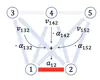
Recent research suggests that systematic generalization in natural language understanding remains a challenge for state-of-the-art …
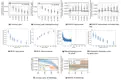
Deep ensembles offer consistent performance gains, both in terms of reduced generalization error and improved predictive uncertainty …

This paper explores the capabilities of current transformer-based language models for program evaluation of simple functional …
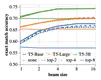
Large pre-trained language models for textual data have an unconstrained output space; at each decoding step, they can produce any of …

Explainability for machine learning models has gained considerable attention within the research community given the importance of …

Inferring objects and their relationships from an image in the form of a scene graph is useful in many applications at the intersection …