


davidkwock

ServiceNow Employee
Options
- Subscribe to RSS Feed
- Mark as New
- Mark as Read
- Bookmark
- Subscribe
- Printer Friendly Page
- Report Inappropriate Content
02-22-2017
08:56 AM
For many customers once they start using ServiceNow as a strategic platform for their business they run into the issue of managing the inbound project and configuration request. On one hand customers want great business outcomes on the ServiceNow platform, on the other side they have to build an organization that can scale as the demand for the platform grows within their organization.
The good news for organizations is ServiceNow has a demand and governance management methodologies that can support an organization need to expand the platform as they take in new project and configuration request. To ensure success with implementing, managing, and governing the ServiceNow platform, it is important to establish base platform management capabilities and a platform support team. These functions provide operational readiness and supportability to stakeholders and consumers of the platform throughout its lifecycle. Effective supportability begins with an instance strategy and day to day operations plan that will mature with your organization's requirements and needs. Below are the key activities associated with technical governance and can be used as a starting point to further develop this capability.
- Demand Management: Track and manage requests for new application features and functionality. This includes assessing the requests from a business and technical perspective and prioritizing based on business value and resource constraints.
- Service Request Management: Initial support for "How To" questions and simple configuration changes.
- Solution Development Lifecycle (SDLC):
- Requirements: Capture and manage business requirements and translate them into the technical requirements necessary to configure the ServiceNow platform.
- Testing: Build and execute test plans to support changes in the environment.
- Development: System administration and configuration based on requirements and architectural guidelines.
- Defect Management: Capture, track, and resolve system defects.
- Release Management: Bundle changes into release packages to support desired technical and business outcomes.
- Change Management: Track and manage changes to the platform to minimize risk and disruption to the organization.
- Incident and Case Management: Track and manage service restoral for system related performance issues.
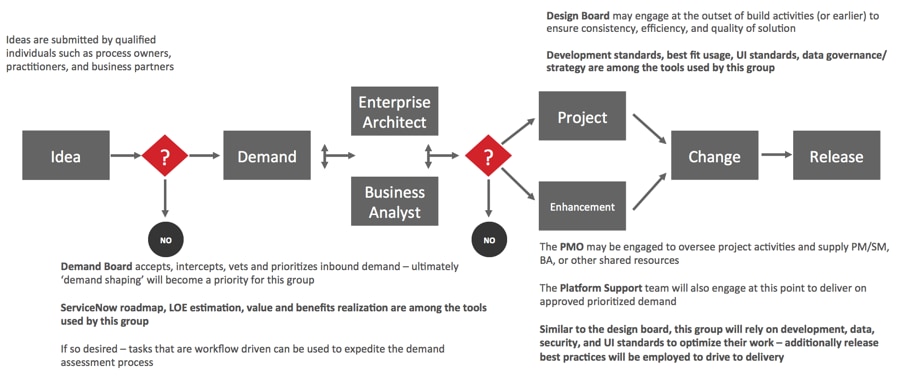
In addition, to the key areas of governance a business process to support the demand process is critical for success.
The diagram above is an example of a demand management process that can give customers a start on developing an internal process with the proper roles and responsibilities that support a growing demand and governance discipline in an organization. In order for organizations to scale the business outcomes that come from the ServiceNow Platform, customers must adopt a robust governance and demand management business process with the proper roles and responsibilities. Many times the initial implementation can be successful without a formal structure, but to have long-term success and continued scalability, governance and demand management is required.
- 1,308 Views
1 Comment
You must be a registered user to add a comment. If you've already registered, sign in. Otherwise, register and sign in.