9

Handling out-of-distribution (OOD) and adversarial inputs has become a major stake in the real-world deployment of machine learning …

We extend score-based generative diffusion processes (GDPs) to sparse graphs and other inherently discrete data, with a focus on …

Offline Reinforcement Learning (RL) via Supervised Learning is a simple and effective way to learn robotic skills from a dataset of …
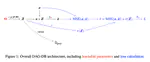
Recently continuous relaxations have been proposed in order to learn directed acyclic graphs (DAGs) by backpropagation, instead of …

End-to-end interactive learning of dialogue systems has been all-but-abandoned in favour of other approaches using more labelled data, …
The ALFRED environment features an embodied agent following instructions and accomplishing tasks in simulated home environments. …
Continual learning (CL) aims to design algorithms that can learn from non-stationarystreams of stationary tasks without forgetting. …

Data augmentation is a widely employed technique to alleviate the problem of data scarcity. In this work, we propose a prompting-based …
We outline three research directions towards the practical implementation of explainable, sensible and virtuous chatbots for the …