9

The BigCode project is an open-scientific collaboration working on the responsible development of large language models for code. This …

Large language models have been fine-tuned to learn poetry via supervised learning on a dataset containing relevant examples. However, …
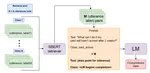
In-context learning (ICL) using large language models for tasks with many labels is challenging due to the limited context window, …

Pretrained large generative language models have shown great performance on many tasks, but exhibit low compositional generalization …

Modularity and compositionality are promising inductive biases for addressing longstanding problems in machine learning such as better …

Geospatial Information Systems are used by researchers and Humanitarian Assistance and Disaster Response (HADR) practitioners to …

We introduce Breadth-First Pipeline Parallelism, a novel training schedule which optimizes the combination of pipeline and data …

Building causal graphs can be a laborious process. To ensure all relevant causal pathways have been captured, researchers often have to …
Unsupervised skill learning aims to learn a rich repertoire of behaviors without external supervision, providing artificial agents with …
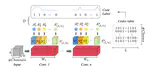
Neural networks are known to fail with high confidence, especially for data that somehow differs from the training distribution. Such …