Home Conversations On AI App Development CRM Enterprise IT Ethics & Governance Futures HR Industries ServiceNow on ServiceNow Platform Foundations Products & Solutions All topics For Leaders In IT & Dev Customer Experience Finance, Operations & Strategy Employee Experience Security & Risk News & Events People & Culture My List Explore All
March 4, 2023 10 min Resilience and risk management Ethics and Governance Research
generative ai your companies newest threat hunter
Today's organizations face challenges and risks from every side. ServiceNow and ThoughtLab surveyed 1,000 global executives to understand how organizations are responding to security issues. Our research highlights the risk management strategies of risk-ready organizations. Consider this report a roadmap for effective risk mitigation.
Executives - 1,000
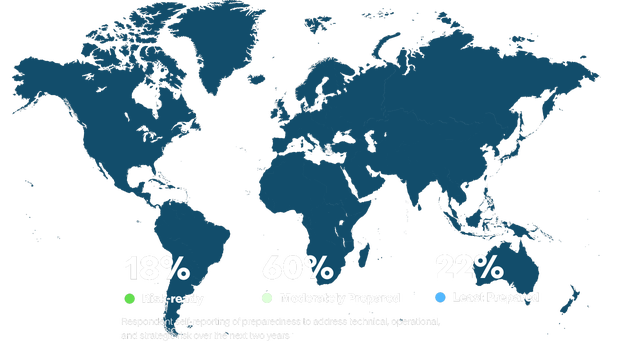
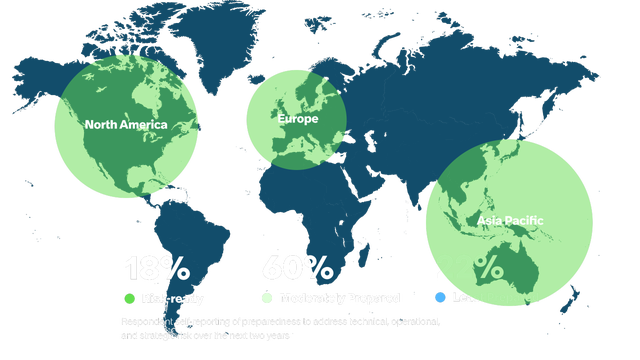
Image of the world in background. And, percent of respondent self-reporting of preparedness to address technical, operational, and strategic risk over the next two years. 18% risk-ready, 60% moderately prepared, 22% least prepared.
Regions - 3
World map graphic showing regional risk preparedness based on respondent self-reporting. North America: 18% Risk-ready. Europe: 60% Moderately Prepared. Asia Pacific: 22% Least Prepared. Data reflects preparedness to address technical, operational, and strategic risk over the next two years."
Countries - 11
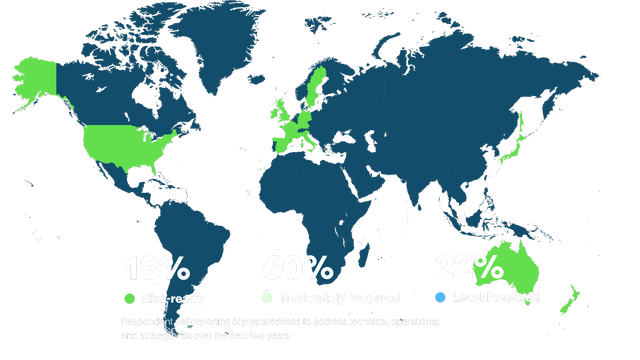
World map highlighting three regions in green risk preparedness levels based on respondent self-reporting. North America: 18% Risk-ready. Europe: 60% Moderately Prepared. Asia Pacific: 22% Least Prepared. Data reflects preparedness to address technical, operational, and strategic risk over the next two years
Sectors - 5
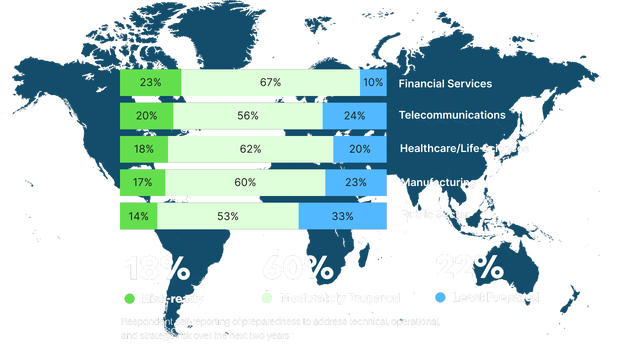
Stacked bar chart showing risk preparedness by industry, based on respondent self-reporting. Financial Services leads with 23% Risk-ready, 67% Moderately Prepared, and 10% Least Prepared. Telecommunications: 20%, 56%, 24%. Healthcare/Life Sciences: 18%, 62%, 20%. Manufacturing: 17%, 60%, 23%. Public Sector: 14%, 53%, 33%. Overall averages: 18% Risk-ready, 60% Moderately Prepared, 22% Least Prepared. Data reflects preparedness to address technical, operational, and strategic risk over the next two years.
Risk-ready leaders follow these best practices 1 Build a risk-aware culture organization
Train worldwide staff, hire risk specialists, and foster coordination and communication.
2 Manage risk holistically
Allow risk management and cybersecurity teams to work with diverse functions such as IT, marketing, finance, and human resources.
3 Create effective risk and resilience processes
Institute new procedures for assessing ESG risks and expand risk appetite statements to include tech risks.
4 Develop a resilient workplace
Reduce human errors and provide staff with the tools and data they need to succeed at risk management.
5 Strength risk and resilience processes
Focus on the well-being of employees and provide a safe, flexible, and healthy work environment.
6 Harness the latest techologies
Utilize AI, IoT, digital twins, and real-time analytics, as well as advance cybersecurity solutions, to transform your ability to manage risks. 
Build a risk-aware organization
01 Build a risk-aware culture organization Train worldwide staff, hire risk specialists, and foster coordination and communication.
  • Step 1
    Build resilient, risk-aware culture
  • Step 2
    Involve IT and risk teams in innovation plan
  • Step 3
    Improve communications during discruptions
  • Step 4
    Recruit resilience and risk specialist
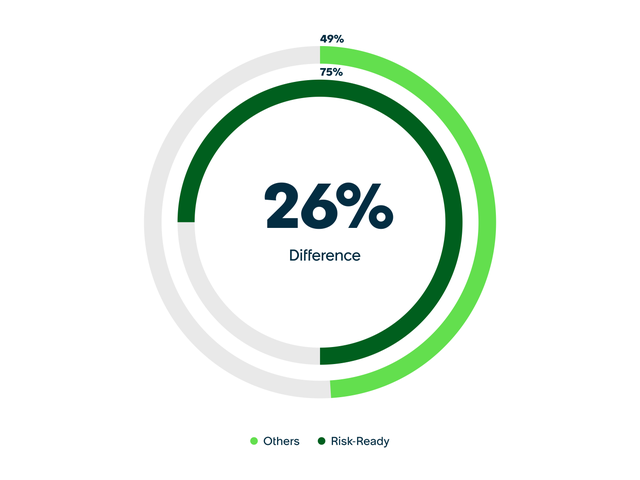
Graphic listing 4 steps for building a risk-ready culture alongside a donut chart showing a 26% difference between Risk-Ready organizations (75%) and others (49%). Steps include: build a resilient risk-aware culture, involve IT and risk teams in innovation planning, and recruit resilience and risk specialists
Manage risk holistically
02 Manage risk holistically Allow risk management and cybersecurity teams to work with diverse functions such as IT, marketing, finance, and human resources.
Horizontal bar chart showing functions risk-ready organizations include most in holistic risk mgmt: HR(48%), IT (45%), Customer Mgmt (41%), Legal (41%), Finance (40%), and Marketing (40%). Bars represent current inclusion rates, with a secondary indicator for projected growth over the next two years."
Create effective risk & resilience processes
03 Create effective risk and resilience processes Institute new procedures for assessing ESG risks and expand risk appetite statements to include tech risks.
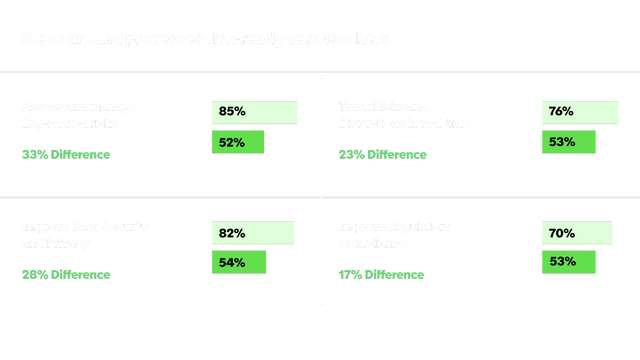
Chart comparing steps risk-ready organizations take versus others across four process areas: Assess and manage ESG-related risks (85% vs. 52%, 33% difference), Track Risks and Disruptions in real time (76% vs. 53%, 23% difference), Improve Data Security and Privacy (82% vs. 54%, 28% difference), and Improve Regulatory Compliance (70% vs. 53%, 17% difference).
Develop a resilient workplace
04 Strengthen risk and resilience processes Reduce human errors and provide staff with the tools and data they need to succeed at risk management.
23% Integrate workflows into platform 20% Use business-continuity tools 15% Speed up IT support
Strengthen risk and resilience processes
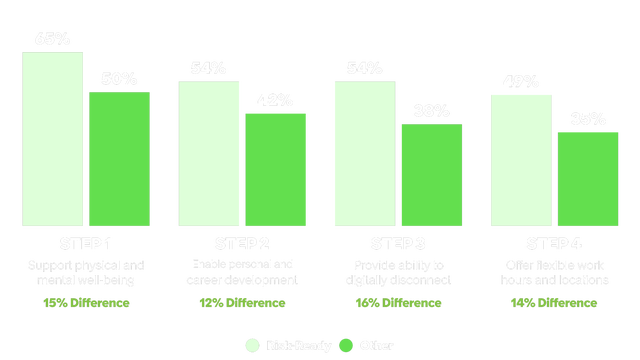
05 Develop a resilient workplace Focus on the well-being of employees and provide a safe, flexible, and healthy work environment.
Alt
Harness the latest technologies
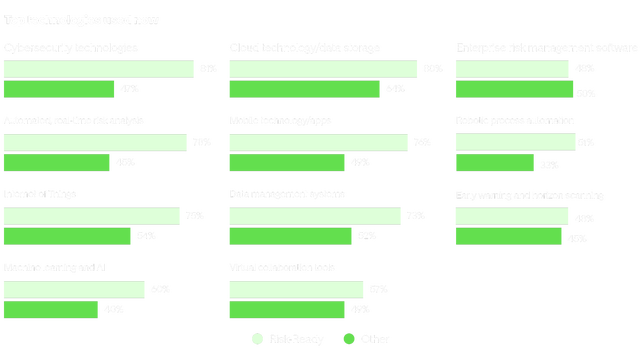
06 Harness the latest technologies Utilize AI, IoT, digital twins, and real-time analytics, as well as advanced cybersecurity solutions, to transform your ability to manage risks.
Alt
Next up
Dive into more conversations AI App Development CRM Customer Stories Ethics & Governance Human Resources Industries IT Now On Now Platform Foundations Products & Solutions All Topics
Stay in the know Join Us
stay in know image
Alt