Large Language Models
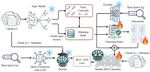
Retrieval-augmented generation (RAG) systems depend critically on how documents are chunked and searched. Fine-grained chunks can …
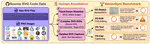
We introduce VectorGym, a new comprehensive multi-task benchmark for evaluating Vision-Language Models (VLMs) on Scalable Vector …
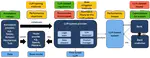
Framing LLMs as products of complex supply chains rather than monolithic entities facilitates the creation of nuanced approaches to …
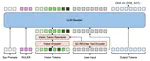
GUI grounding, the task of mapping natural-language instructions to pixel coordinates, is crucial for autonomous agents, yet remains …
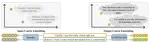
Fine-tuning LLM-based text embedders via contrastive learning maps inputs and outputs into a new representational space, discarding the …
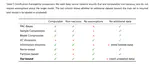
Generalization bounds for deep learning models are typically vacuous, not computable or restricted to specific model classes. In this …
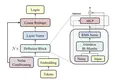
Diffusion-based language models have recently emerged as a promising alternative to autoregressive generation, yet their reliance on …
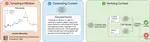
Context-aided forecasting (CAF) holds promise for integrating domain knowledge and forward-looking information, enabling AI systems to …

Recent progress in large language models (LLMs) has focused on producing responses that meet human expectations and align with shared …
Context-aided forecasting (CAF) holds promise for integrating domain knowledge and forward-looking information, enabling AI systems to …