





When ServiceNow created the inaugural Enterprise AI Maturity Index last year, the goal was to understand how AI is transforming organizations across the globe—and how organizations are responding to the rise of generative AI (GenAI). At the time, maturity levels were low across all industries, including telecommunications.
This year, we surveyed almost 4,500 executives worldwide—including 276 from telcos—to track how maturity levels have changed. The results are surprising.
AI maturity scores this year are even lower than in 2024, and telecom companies are not immune to the slowdown, according to a new report from ServiceNow. Telecom maturity scores dropped an average of 10 points on our 100-point AI maturity scale, compared to nine points for all respondents.
As AI innovation continues to accelerate, telecom firms need a better roadmap for deploying AI, says Dirk Grote, assistant vice president, telecom and media go to market at ServiceNow.
Many have struggled to deploy new technologies in a highly regulated environment, mired in legacy technologies.
“Telecom architecture is highly complex, with hundreds of connected systems. This complexity becomes the hurdle when scaling an AI pilot—suddenly 15 systems are involved, and that’s where things can break down,” says Grote.
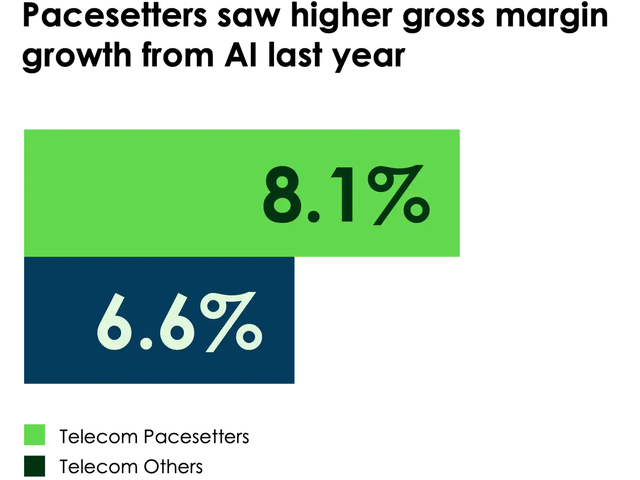
Despite the drop in overall maturity, the research turned up good news too. Nearly nine out of 10 telecom firms are already seeing benefits from AI, including greater productivity for employees. More than 80% have seen increased gross margins, lower costs, improved experiences, and increased competitiveness.
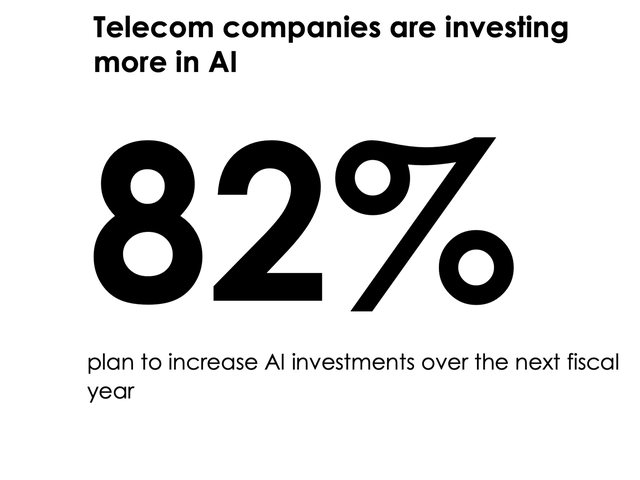
"These technologies offer a powerful tool to drive down operating costs at scale, elevate experiences, and reimagine how functions are performed and optimized,” says Vishy Gopalakrishnan, chief transformation officer at ServiceNow.
Our research has identified an elite group of telecom companies that we call Pacesetters. These top-ranking firms are ahead of the pack across all five pillars of AI maturity: (1) AI strategy and leadership, (2) workflow integration, (3) talent and skills, (4) data governance, and (5) realizing value in AI investment. Telecom Pacesetters outscored the industry average (32.1) across all five areas, with an average score of 44.
Moreover, Pacesetters in the telecom sector saw greater improvements in gross margins, risk management, revenue growth, and competitive positioning than their peers.
However, strict regulations and high long-term capital costs mean that only 15% of surveyed telecom companies are Pacesetters, one of the lowest percentages among industries. By contrast, 32% of firms in the tech sector are Pacesetters.
Here are five best practices that set Pacesetter telecoms apart from the rest.
To get ahead, Pacesetters understand the importance of mobilizing around a shared vision. Members of this cohort are nearly twice as likely as their peers (50% vs. 28%) to coordinate on a clear AI strategy.
Telecom Pacesetters are also more than twice as likely (43% vs. 19%) to have a chief AI officer to execute on that vision. For example, Globe Telecom, the major provider of telecom services in the Philippines, has appointed its first chief AI officer to focus on AI planning, development, and governance.
Most telecom firms have a byzantine ecosystem of technology and systems. When trying to pilot a new technology, this complexity immediately becomes clear.
To untangle what Grote calls a “bowl of spaghetti” of systems architecture, organizations need a unified platform to connect people, processes, and technology.
Pacesetters are using IT platforms with AI-powered workflows to break down organizational silos. These platforms enable Pacesetters to deploy advanced tools such as agentic AI, a type of artificial intelligence that can act autonomously with minimal human oversight, quickly and at scale.
While many organizations worldwide have begun leveraging agentic AI, telecom Pacesetters are ahead of their competitors on piloting or implementing agentic AI for a variety of use cases, including assessing and addressing business risks (45% vs. 34% of others), detecting and managing cybersecurity risks (43% vs. 29%), monitoring and interacting with internal systems (43% vs. 26%), and responding to customer inquiries (40% vs. 21%).
“While GenAI boosts efficiency, agentic AI lets you rethink the entire process,” says Rohit Batra, general manager of manufacturing and telecom, media, and technology industries for ServiceNow. “For example, fixing a service issue that once took hours—talking to the customer, coordinating diagnostics—can now take under 10 minutes. Going forward, the AI can help prevent the issue for future customers.”
The advent of GenAI has only widened the already challenging tech talent gap. Even telecoms with strategies for AI adoption often lack the skills and talent necessary to execute their plans.
However, Pacesetters are taking steps to both hire new talent and upskill existing employees. Overall, 81% of Pacesetters have created training and support programs to upskill employees, while 67% host AI learning events to empower workers to use AI in their jobs.
Data management and governance are critical to AI strategy. Although most telecom firms maintain vast stores of data, they can extract value from only a small portion of it, says Batra.
Pacesetters build data management systems to clean, standardize, integrate, and optimize data. They prioritize governance frameworks that ensure that the data fed to their AI models is secure, reliable, and in compliance with regulatory guidelines.
Get more insights in the complete AI Maturity in Telecom report.