





We are living in an increasingly digital world. According to Qualtrics, some 40% to 60% of most people’s interactions with companies—setting up new accounts, scheduling appointments, making purchases, or getting help—happen across the internet. As Gen Z gains in economic influence and purchasing power, those percentages are only going to grow over time.
Digital customer experience is the sum total of every interaction customers have with all of a business’s digital touch points. That includes websites, social media, mobile applications, email, instant messaging, live chat, online ads, community forums, and digital kiosks at brick-and-mortar locations.
This means that, increasingly, the majority of customer experience (CX) is digital. Companies that don’t adapt their CX strategy to this new reality will find themselves left behind.
According to surveys by PwC, customers would pay up to 16% more for some products if they were guaranteed a positive shopping experience. The reverse is also true: 1 in 3 consumers say they will walk away from a brand after only one bad experience.
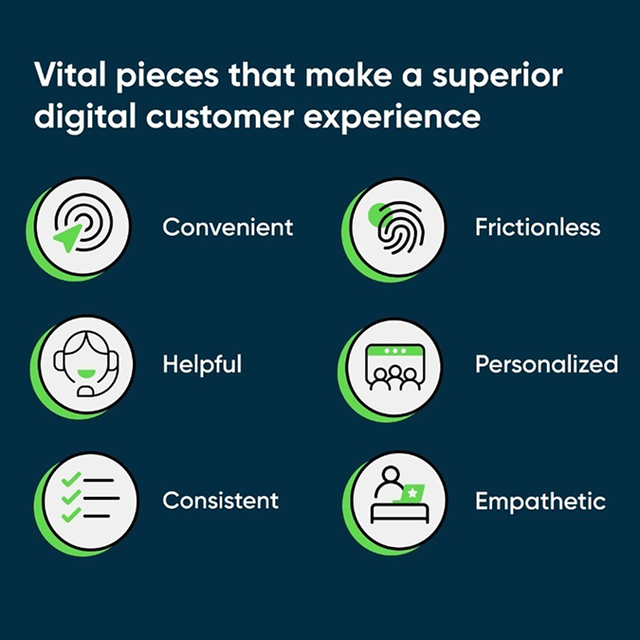
The role of those digital channels is to provide a good experience to customers and leave them feeling better about the brand. Each channel should be convenient, efficient, and personalized, not slow, frustrating, or prone to glitches.
A superior digital customer experience delights new and existing consumers, discourages them from leaving for a competitor, and increases their lifetime value for the company. That means the digital experience needs to be:
Customers won’t have a positive digital experience if they can’t figure out how to find it. Digital channels need to be everywhere customers are: on the web, in apps, within social media, and so on. The more ways people interact with your brand, the better
A good digital experience anticipates customers’ needs and offers solutions. That means providing useful information and self-service support options where people can easily find them. Such as:
- Accurate and timely information about product availability, store location, operating hours, and other relevant details
- Online product guides and other high-quality content
- Multiple options for customer support
- Easy ways to provide customer feedback
- Intelligent chatbots that can resolve problems
As consumers move from branded websites to mobile and messaging apps and back, they should have the same high-quality experience in each place. Movement across each of these channels should be as seamless as possible. That means brands need to break down silos and share customer data across channels.
According to Salesforce Research, nearly three-quarters of customers expect companies to understand their unique needs and expectations. They want brands to know who they are across every channel, and to offer personalized service. That can be as simple as being greeted by name or as complex as product recommendations tailored to their purchase history.
Empathizing with a customer’s problems is as important in digital experience as it is in person. Here, unfortunately, many companies fall short. Salesforce Research reports that 68% of consumers expect brands to demonstrate empathy, but only 37% say they actually do.
As consumers move more of their interactions to the digital world, it’s crucial for organizations to provide ever more engaging digital experiences. The goal is to give consumers a positive feeling every time they encounter a brand, whether offline or online.
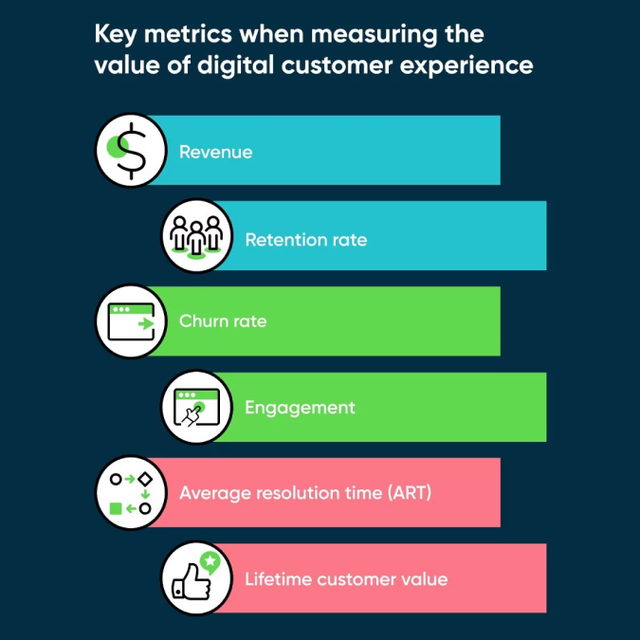
Revenue is a key benchmark of business success, and customer-centric companies are 60% more profitable than those less customer focused, according to Deloitte. But organizations that want to deliver excellent customer experience should also consider these other metrics:
Retention rate shows the share of customers who continue to do business with a company over time. According to Qualtrics, companies with strong customer engagement across all channels enjoy a retention rate nearly three times higher than those with weaker engagement.
Churn rate is the flip side of retention, measuring the percentage of customers that leave over a specified period of time. PwC found that nearly one-third of customers would abandon even a beloved brand after just one poor customer experience. Satisfactory customer experiences reduce the churn rate.
Engagement is a measure of how often customers interact with your digital touch points. What percentage of emails do they open? How much time are people spending on your site or sharing content about your brand via social media? If your engagement numbers aren’t rising, you’re probably doing something wrong.
Average resolution time (ART) measures how quickly you resolve customer problems via a digital experience. How does your time compare to industry averages? According to Observe.ai, average resolution times for live chat sessions are just under 8.5 minutes, but vary by industry. Reducing your ART can indicate you’re doing a better job of serving customers.
Lifetime customer value is the ultimate measure of customer loyalty. Delivering great digital CX can establish a greater emotional connection with customers, which can increase a customer’s lifetime value by more than 300%, according to Motista.
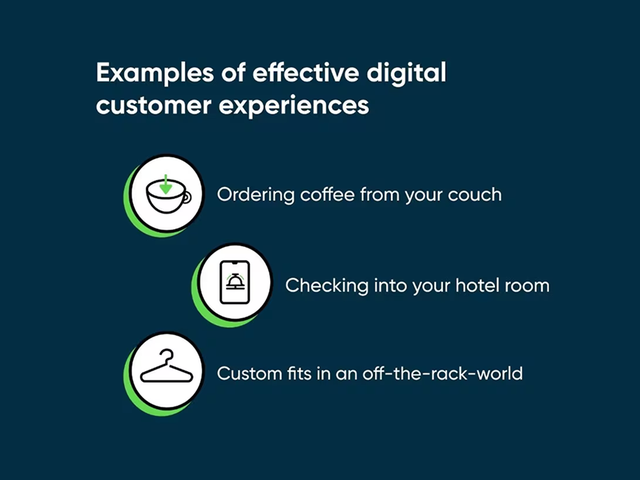
A handful of leading brands have set the gold standard for positive digital customer experiences.
Marriott Hotels was the first major hospitality chain to allow guests to skip the front desk and check in to their rooms via their mobile phones. Contactless check-in is now standard across many hotel chains, allowing customers to save time while forging a stronger connection with them. A June 2022 survey by Oracle found that nearly three-quarters of travelers prefer using mobile apps to manage their hotel experience.
By the end of its 2022 fiscal year, the company boasted of 3.8 million active clients and $2.1 billion in revenue. Building a one-to-one relationship with customers at scale is the ultimate achievement in creating a great digital CX.
Customer experience has evolved over the decades, and today many of its aspects are digital. To keep customers loyal and develop a competitive advantage, companies should consider applying these best practices.
Find out how ServiceNow helps put AI to work for customer experience.