






Since the 1990s, smart city initiatives have delivered useful but incremental improvements such as smart parking sensors, adaptive streetlights, and real-time transit apps.
Now, agentic AI can turn those solo acts into an orchestra, coordinating digital and physical systems from an intelligent operations center that learns, adapts, and proactively responds to citizens’ needs.
Whether you're a municipal leader or a business executive evaluating urban investments, this six-step framework can help you chart a path from today's siloed smart city to tomorrow’s connected cognitive city.
Establish a clear vision linking AI capabilities to key performance indicators—not just for individual systems, but across the entire urban organism.
Think holistically about people, environments, and infrastructure and the innovations required to connect them all.
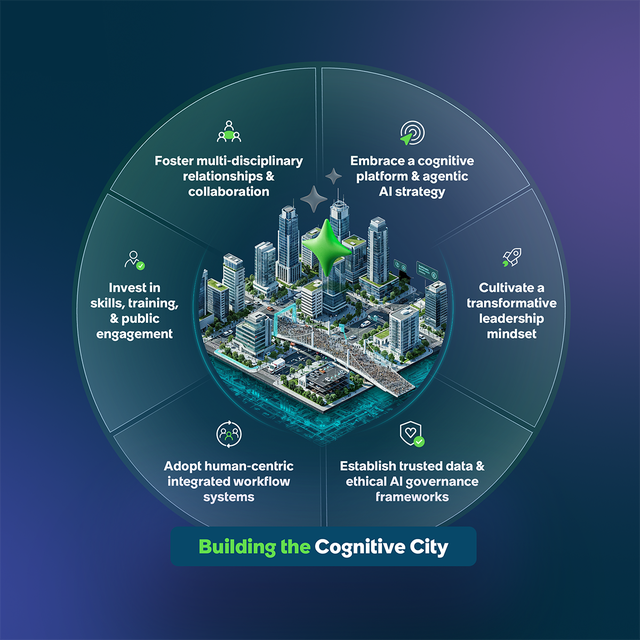
See what this framework looks like in action in our report, From Smart Cities to Cognitive Cities.