



Maturity Index
2026



While many organizations are using AI, only a handful are reaping transformational benefits. Most are grappling with fragmented data, ungoverned agents, disconnected workflows, and accountability gaps that grow with every deployment—in a word: chaos.
That chaos is compounded by the rise of agentic AI. Fifty-nine percent are using it, but few are creating autonomous or multistep workflows with it. That lack of orchestration only fuels the confusion.
One notable finding in our survey of 4,500 executives across 19 countries and 12 industries is that the average AI maturity score rose to 51, up from last year’s dip down to 35. While a 16-point bump is impressive, the low overall score indicates that when it comes to implementation, AI ambition outpaces execution.
As orgs automate yesterday’s work instead of reinventing tomorrow’s, the cracks are beginning to show. Read on to find out how to close the gaps and orchestrate your way to AI success.
So much spending, such meager results
What executives miss, what employees know
AI maturity isn't a milestone; it's a multiplier
It's time to organize for AI, not just around it
Business leaders understand that AI adoption is existential: Those who snooze will most certainly lose. That's why spending more than doubled in a single year. But there’s a gap between AI investment and AI accountability, and that’s where the chaos takes hold.
Although the money has poured in, the underlying infrastructure has been slow to evolve. While agentic AI is everywhere, the data is often disconnected. Only 16% have replaced their fragmented legacy systems with an integrated foundation. That’s like bolting a supercharged V8 to a Model T chassis: The moment you rev it up, the wheels are bound to come off.
We found that while executives are largely confident in their AI strategy, employees are not. Fifty-three percent say they aren’t impressed with their leadership’s handling of AI transformation.
Across industries and geographies, the gap between leadership's perception of AI readiness and the operational reality that their teams experience is growing. Organizations are deploying AI tools without building the foundations that make those tools work: training, integration, clear governance. The result is adoption without transformation, not to mention a very unsettled workforce.
The paradox is that employees are genuinely enthusiastic about AI. They’re more likely than executives to believe it will improve their job satisfaction, enable higher-value work, and strengthen collaboration.

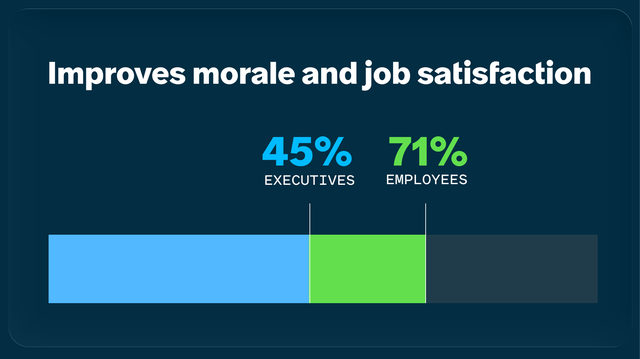
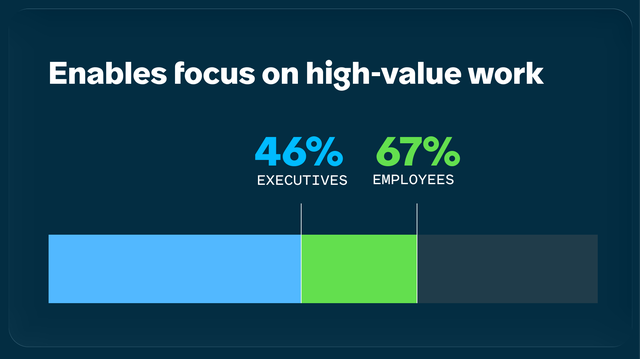
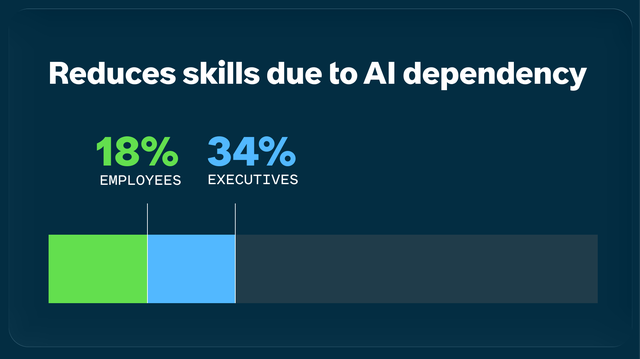
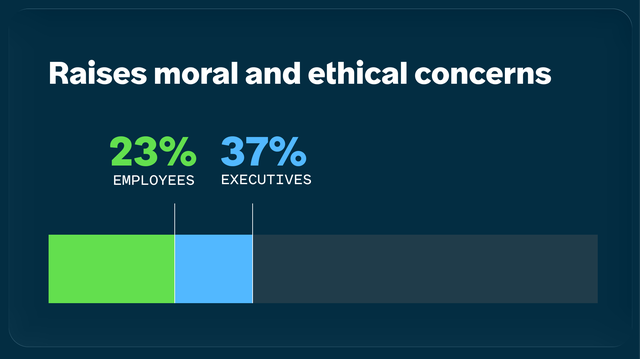
Pacesetters, the one-fifth of organizations our research identified as having achieved advanced AI maturity, are realizing an average return on investment (ROI) of 160% on their AI investments. We project that number will rise to 194% next year.
These Pacesetters don’t view AI as a single tool or initiative. They bake it into their entire organization with end-to-end workflows that connect systems, teams, and decisions. They avoid AI chaos by implementing governance at scale. And, importantly, they create a culture of experimentation, where AI is woven into the fabric of the entire organization.
Pacesetters make deliberate decisions about how work should flow before deploying AI, not after. This allows them to avoid the trap of automating outdated workflows on yesterday’s infrastructure. Instead, they’re using AI to reimagine how work gets done.
Without orchestration, you just have random acts of automation. And when that happens, chaos gaps arise and grow. Our research found significant disconnects in four key areas: data, agentic AI, workflows, and governance.
Pacesetters set the standard for end-to-end orchestration. But too many organizations are automating work in the same way they built their technology stacks: through point solutions that address one problem, one tool, one department at a time.




Most studies tell you where you stand. The AI Enterprise Maturity Index will help you understand what to do next.
For every stage of the maturity curve, we've identified the specific barriers—fragmented systems, low data standardization, lack of integrated workflows—and the moves that address them. The result is a tailored AI roadmap for executives ready to lead the next phase of transformation.