




In enterprise technology, it’s rare to see excitement and anxiety spike at the same time. But that’s exactly what’s happening with artificial intelligence.
According to ServiceNow’s Enterprise AI Maturity Index 2025, average enterprise AI maturity declined by nine points year over year. The reason? Innovation is outpacing most organizations’ ability to absorb it. Executives know AI can transform their business—but few are ready to deploy it at scale, especially in complex, data-intensive functions such as customer experience.
A 2024 survey by MIT Technology Review and Fivetran reinforces the point: 82% of executives said AI success depends on integrating multiple data sources. Yet in many enterprises, the systems designed to manage customer relationships remain fragmented and reactive—better at tracking problems than solving them.
Customer relationship management (CRM) is a case in point. Despite decades of investment, many companies are stuck with systems that feel more like historical archives than engines of customer value. At ServiceNow’s Knowledge 2025 conference in Las Vegas, one message came through loud and clear: The future of CRM isn’t about tracking interactions. It’s about orchestrating intelligent experiences—and AI is the key.
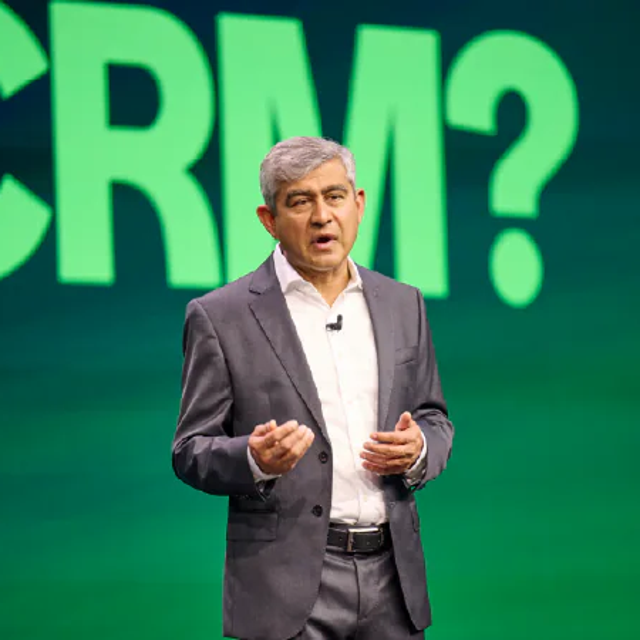
“Let’s face it, traditional CRM is broken,” said Amit Zavery, ServiceNow’s president, chief product officer, and chief operating officer. “It is a patchwork of point solutions held together with duct tape and chewing gum. The result? More complexity, more cost, and less value.”
CRM was supposed to bring companies closer to their customers. But too often, it has done the opposite—creating data silos, bloated workflows, and missed opportunities for meaningful engagement.
“Why is it that after spending literally billions of dollars a year, we are not in a better place?” asked Terence Chesire, ServiceNow’s VP of product management for CRM and industry workflows. “AI has only compounded this problem, causing expectations to expand exponentially.”
This mismatch between investment and outcomes is fueling executive frustration. AI has raised the bar for customer expectations—yet legacy CRM systems weren’t built to deliver in real time, or at scale.
The real promise of AI isn’t automation for its own sake. It’s intelligent orchestration. CRM systems of the past were designed to log activities and manage pipelines. AI-native systems are built to anticipate needs, make recommendations, and take action.
“The future of CRM is a unified, AI-powered revenue platform that connects every step of the customer journey, from lead to quote to order to cash,” said Emily Rust, CRM and industry expert services practice leader at ServiceNow.
Instead of merely recording customer data, AI-powered CRM learns from that data—and responds. AI agents triage support cases, optimize workflows, and ensure that no opportunity or issue falls through the cracks. At ServiceNow, for example, AI agents currently automate 37% of customer support case workflows—freeing human agents to focus on more complex, higher-value interactions.
This is what agentic AI looks like in action: software that powers the customer journey, rather than just supporting it. And organizations with the highest levels of AI maturity are best positioned to reap the benefits. These AI Pacesetters, as identified in our Enterprise AI Maturity Index research, are more likely to have deployed agentic AI, and they’re already seeing measurable ROI.
Making the most of AI-powered CRM’s capabilities also demands a new organizational mindset. CRM is no longer just a sales tool—it’s the connective tissue of the modern enterprise.
“The modern CRM solution is the ability to connect all of the people in different functions and all the systems behind those functions into a single coherent platform,” said Paolo Juvara, chief digital transformation officer at Pure Storage, during a panel discussion at Knowledge 2025.
Case in point: BT Group, one of the world’s largest telecommunications companies, recently reimagined how it delivers customer support. Facing a massive volume of service interactions across complex legacy systems, BT used AI to simplify and accelerate case resolution. By automatically generating summaries and resolution notes, BT reduced time spent on documentation by 55%, cut the average outage resolution time from 4.7 hours to under a minute, and achieved a 33% reduction in average case resolution time—a clear example of what happens when CRM becomes a proactive, intelligent platform.
BT is not alone. Xerox freed up an average of 53 minutes of technician time per day through AI-powered automation—time that’s now reinvested in customer-facing work. Meanwhile, Lumen Technologies recorded a 75% reduction in order fulfillment time, demonstrating how AI can streamline even the most operationally complex customer workflows.
In a world where AI moves faster than most organizations can adapt, CRM is becoming a proving ground for digital maturity. Organizations on the leading edge are showing what’s possible when CRM becomes intelligent, proactive, and fully integrated across the customer lifecycle.
“What we’re trying to do is reinvent the category,” said Bill McDermott, ServiceNow chairman and CEO, in a live interview with CNBC’s Jon Fortt at Knowledge 2025. “And that includes how you order things, how you fulfill that order, and how you service the customer relationship. And we’re doing that all on a single platform, with a pristine architecture, that’s fully integrated to enable autonomous agentic AI to serve that customer.”
The rest of the market faces a choice: Continue stitching together point solutions and falling behind, or rethink CRM from the ground up with AI at the core. The technology is ready. Customers are ready. The real question is—are you?
Find out how ServiceNow can help you rethink CRM.