




Here's the paradox keeping enterprise leaders up at night: Companies are spending more on AI than ever before, yet enterprise AI maturity declined 20% year over year. Customer satisfaction isn't improving. Churn is rising. And the teams closest to customers are more frustrated than ever.
I've lived this from both sides. As a former chief information officer, I made the technology investment calls. Today, I spend my time with enterprise leaders making those same calls and I keep seeing the same mistake repeated at scale. Enterprises are buying AI, not transformation.
We surveyed more than 34,000 executives, service professionals, and customers globally for The CX Shift: A study of customer expectations in the AI era. The findings should challenge how most organizations think about their customer experience (CX) strategy.
Start with the empathy gap. Half of customers say lack of empathy is their single biggest frustration with service. Only 23% of executives recognize it as a major issue, according to our research.
That's not a data problem; it's a listening problem. And it points to a fundamental disconnect between where leaders invest and what customers actually value.
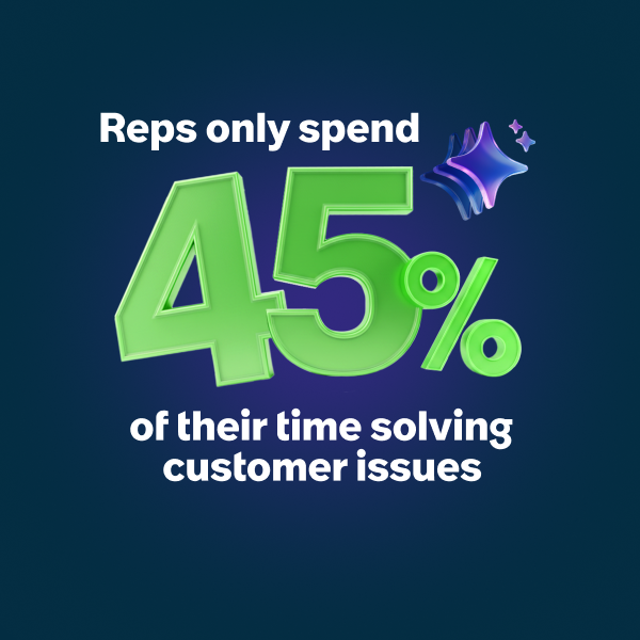
Then there's the operational reality hiding in plain sight: 80% of service representatives must toggle between three to five systems just to answer one customer question. They spend only 45% of their time actually helping customers. The rest goes to navigating fragmented tools, hunting for context, and manually stitching workflows together.
What looks on the surface like a productivity gap is actually a symptom of a deeper structural failure.
Bolting AI onto broken processes doesn't create better experiences; it scales inefficiency faster. The data confirms this: Only 34% of executives say their enterprises have made significant progress connecting people, data, and processes on a single platform. And just 16% report meaningful progress in building emotional connections with customers through AI. We’re automating the wrong things.
The organizations pulling ahead have figured something out: Customer relationship management (CRM) isn't a system of record; it's an experience platform.
Enterprises wondering how to add AI to their existing tech stack are asking the wrong question. A better place to start is by asking, "How do we rebuild the connective tissue so that AI, data, and human judgment work together seamlessly?"
I've seen what this looks like in practice. One global telecom company unified 26 systems and 8,800 data silos onto a single platform. The result: 500,000 fewer customer calls, 90% of dispatch tasks automated, and service teams freed to focus on relationships and complex problem-solving instead of system-hopping. That's not an efficiency story; it's a growth story.
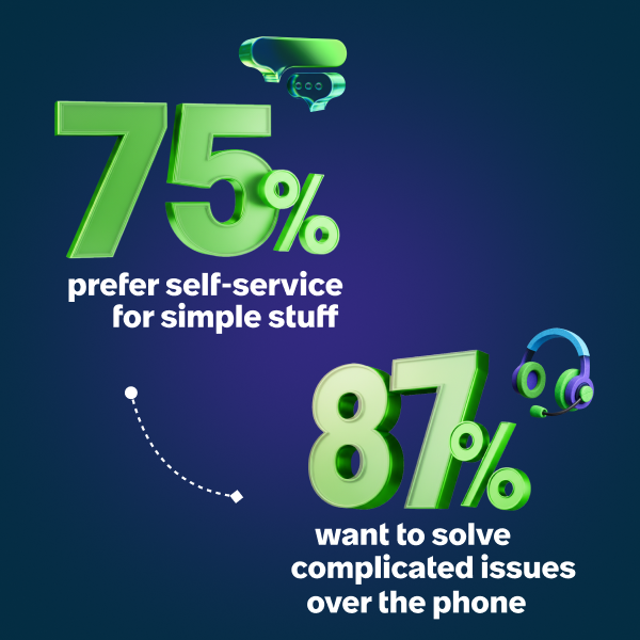
The human element isn’t something to optimize away. Our research shows 87% of customers prefer a phone call with a human for complex interactions. Yet only 7% of executives plan to prioritize phone service in the next three years. That gap can’t be solved with a better chatbot.
Customers want self-service that actually works—75% prefer to resolve issues on their own. But they also want a seamless path to a human when they need one. That happens only when your service teams aren't buried in operational friction—and when AI connects context across the enterprise so that the person picking up the phone already understands the situation.
The path forward is architectural, not incremental. Stop treating AI as a feature layered onto existing systems. Start treating your CRM as the strategic core that connects data, workflows, and intelligence across the enterprise.
Break down the silos that force your people to work harder to deliver worse experiences. And measure success the way your customers do—not by deflection rates, but by trust, loyalty, and outcomes.
When your people have what they need, customers feel it. When customers feel it, they stay. That's not a technology win; that's a growth strategy.
The blueprint is there. The leaders who act on it now won’t just improve CX, but they’ll redefine it.
Get more insights from The CX Shift research.