


Conversations On AI App Development CRM Enterprise IT Ethics & Governance Futures HR Industries ServiceNow on ServiceNow Platform Foundations Products & Solutions All topics For Leaders In IT & Dev Customer Experience Finance, Operations & Strategy Employee Experience Security & Risk News & Events People & Culture My List Explore All
March 24, 2023 4 min The characteristics of innovation Enterprise IT Thought Leadership
Jonathan rackoff author image
Jonathan Rackoff Head of Global Policy, HBAR Foundation
Marquee background green block images

Smart digital tools and a modern IT platform are crucial to innovation, but the best tech strategy on the planet won’t deliver innovation without the right people, processes, and structures. A recent ThoughtLab and ServiceNow survey of 1,000 executives explores what leaders are doing to build competitive advantage in innovation.

People, motivated and equipped with the right tools and skills, are the secret sauce. The survey highlights leaders from across Europe (16%), Asia-Pacific (19%), and North America (20%), and from companies with revenues ranging from $350 million to $999 million (20%), $1 billion to $4.99 billion (19%), and $5 billion and more (27%).

Here’s how leaders around the globe say they develop a strong culture of innovation.
COLLABORATION Leaders are highly collaborative
  • Leaders involve more stakeholders in creating an innovation culture than others
  • Not every stakeholder carries the same weight
  • Senior management and board members are heavily involved
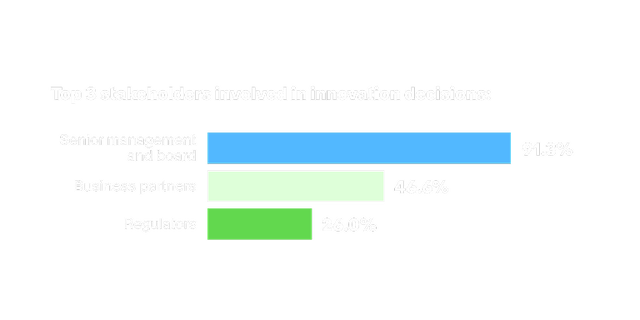
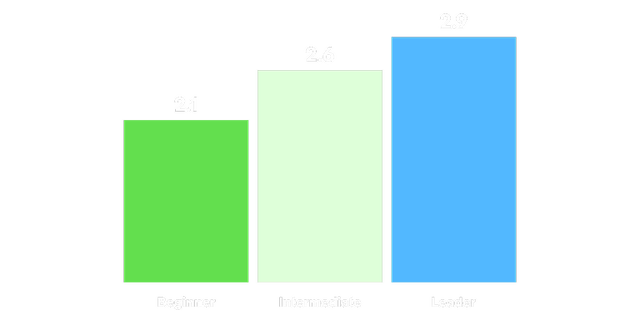
Average number of stakeholders involved in innovation decisions, reported by maturity level
The image shows the top three stakeholders involved in innovation decisions: Senior management and board (91.3%), Business partners (46.6%), and Regulators (26.0%). The second is a bar chart showing average number of stakeholders involved by maturity level: Beginners involve 2.1, Intermediates 2.6, and Leaders 2.9 — the more mature the organization, the more voices at the innovation table.
Alt
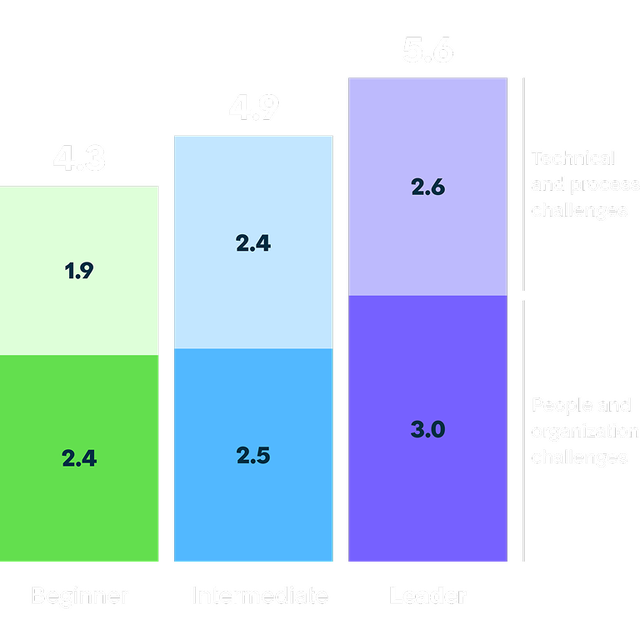
bar chart showing average number of challenges faced by organizational maturity level, split between people/organization challenges and technical/process challenges. Leaders face the most overall (5.6 total: 3.0 people and 2.6 technical), Intermediates (4.9: 2.5 and 2.4) and Beginners (4.3: 2.4 and 1.9).
VISION Leaders see two steps ahead
  • Leaders anticipate more difficulties than others in creating an innovation culture
  • People and structure are the biggest challenges to solve for, more so than tech and processes
  • Lack of data management systems and tools is a persistent hurdle in innovation
FARSIGHTEDNESS For leaders, revenue isn’t always the explicit goal
  • Leaders see more (and different) benefits
  • Improved customer satisfaction is viewed as the top benefit of increased innovation
  • Intermediates and beginners reported greater revenue/sales as the top benefit
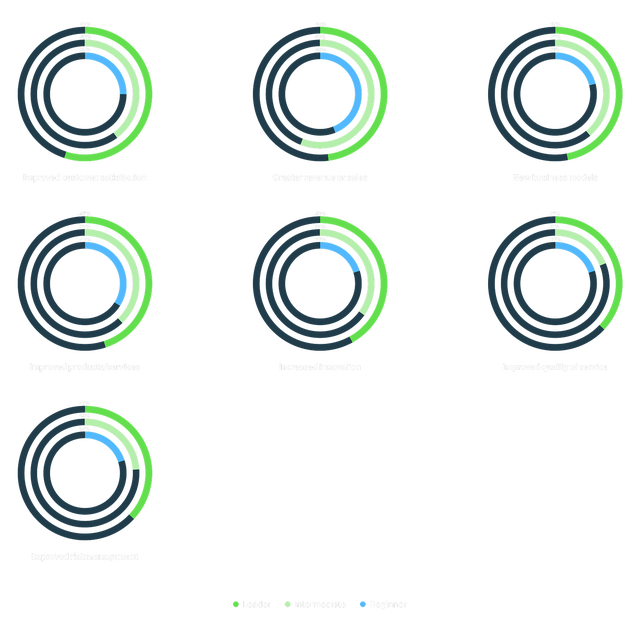
Top benefits in creating an innovation culture, by maturity level
Seven donut charts comparing innovation outcomes by maturity level. Leaders consistently outperform across all categories: Improved customer satisfaction (55% vs. 40% vs. 25%), Greater revenue or sales (48% vs. 56% vs. 44%), New business models (47% vs. 39% vs. 21%), Improved products/services (45% vs. 38% vs. 34%), Increased innovation (42% vs. 35% vs. 20%), Improved quality of service (37% vs. 19% vs. 20%), and Improved risk management (37% vs. 24% vs. 20%).
FINANCIAL WHEREWITHAL Innovation is expensive

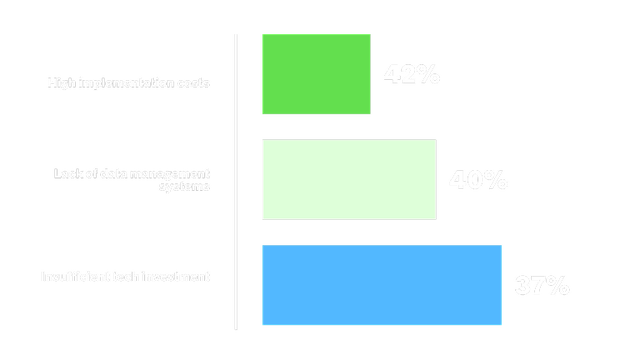
The biggest barrier to fostering innovation? Cost.

Leaders in innovation are often those with the ability to spend. Costs are among the top-cited challenges across maturity levels.
Alt
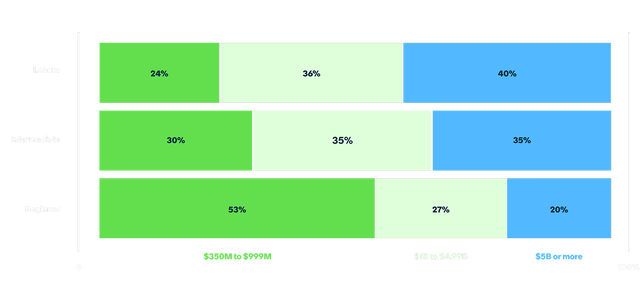
Maturity breakdown by company revenue size
Stacked bar chart showing revenue distribution by maturity level. Leaders skew larger, with 40% reporting revenue of $5B or more. Intermediates are evenly split (30%, 35%, 35%). Beginners skew smaller, with 53% reporting $350M–$999M in revenue — suggesting a strong correlation between organizational size and innovation maturity.
HUMAN-CENTRIC People, process, and skills are critical investments
  • Leaders understand that building an innovation culture takes much more than big bets on technology
  • Sharing clear vision and objectives builds support and buy-in
  • Leaders keep innovation on track with accountability
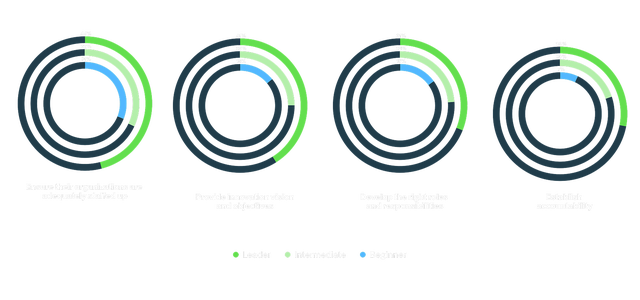
Where leaders vs. non-leaders have made significant progress
Alt
Next up
Dive into more conversations AI App Development CRM Customer Stories Ethics & Governance Human Resources Industries IT Now On Now Platform Foundations Products & Solutions All Topics
Stay in the know Join Us
stay in know image
Alt