




When the ServiceNow Futures team thinks about how AI will transform work, one question gets less attention but is the most important for employees: What will it feel like to go to work when the technologies now arriving become routine?
Sure, AI is likely to affect things such as org charts and performance assessments. But what will change first, and most viscerally, is the rhythm of the workday itself. What might tomorrow’s workday look like, and what does this signal about the steps organizations should be taking today?
What: The Voices Amplified 2026 report found that 55% of consumers have used voice as their primary interface for AI interactions, while “only 29% of companies have deployed customer-facing voice AI.” Enterprise infrastructure is lagging behind how people want to work and communicate.
So what: This disparity signals where enterprise AI interfaces are headed next, with important implications for where work happens. When natural language becomes the leading way into enterprise systems, work turns into a dialogue with the tech stack rather than a series of clicks through applications. That dialogue can happen anywhere you have a phone or other voice interface, such as a classic walkie-talkie or even a smart pendant or other wearable tech.
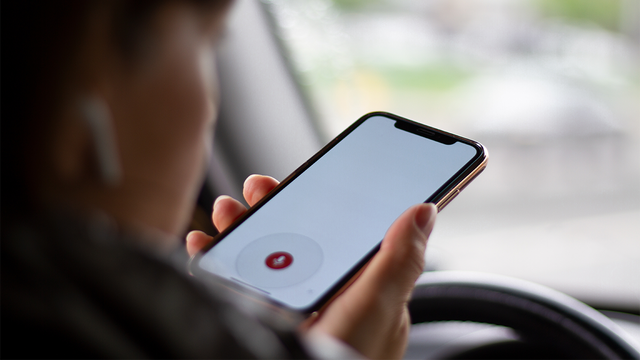
What: Ambient computing, from Apple AirPods with cameras to voice-first interfaces, is beginning to move AI assistance off screens, making it more accessible and ubiquitous.
So what: For workers, ambient context means the briefing can happen in your ears as you walk into the room, or you can get answers on the fly when you’re out in the field. This will open new, more flexible ways for employees to work.
At the same time, organizations will need to consider and take steps to mitigate the effects this might have on attention, presence, and the boundary between being at work and being at rest.
What: A BCG/Harvard Business Review study of 1,488 workers found that as AI absorbs routine work, employees may face a day packed with only the hardest tasks, such as complex escalations, judgment calls, and ambiguous conversations.1 There’s less light work in between to let the brain recover.
So what: A customer service rep, whose easy tickets now go to AI, risks spending every hour on the most challenging cases. A sales rep freed from admin work could now face back-to-back high-stakes calls. The volume drops, but the cognitive intensity per hour rises.
Organizations adopting AI products can alleviate this with solutions such as streamlining tools to prevent swivel-chairing between multiple systems and embedding cognitive recovery time into the workday. Businesses will need to think deliberately about novel ways to support employees handling complex work and promote sustained performance.
What: A National Bureau of Economic Research study of 9,000 Norwegian workers found that high-paying and high-revenue firms devote more resources to meetings. In addition, meeting frequency and intensity were positively linked to employee wage growth. The researchers concluded, “Meetings are the broccoli of work—widely disliked but probably good for us anyway.” for us anyway.”
So what: Everyone thought AI would give us fewer meetings, but it turns out that meetings, like vegetables, are inherently good: The firms that invest more in them also tend to pay better. Instead of using AI to eliminate meetings, organizations should consider how AI can make meetings more effective.

What: A Center for Economic Policy Research study of 26,811 Chinese secondary school students found that “AI adoption raises homework scores by 18% and reduces completion time by 30%, but lowers monthly exam scores by 20% within six months,” with high-stakes entrance exam scores falling 18% to 24%.
The effect was concentrated among the roughly 80% of AI users whose behavior was consistent with outsourcing work to AI rather than using it to learn.
So what: Every organization is about to face some version of this. Without guidance and guardrails, AI helps employees produce better-looking output without necessarily building the underlying capability. A stronger memo doesn’t always equal better thinking.
The answer is to redesign work around understanding. Can the person explain the answer, defend it, apply it somewhere new, or catch it when it’s wrong? This has always been the gold standard in training. Organizations that build in those checkpoints now by testing for explanation and application, not just output, will capture AI's speed gains without quietly losing the judgment they'll need most.
What: Indeed Hiring Lab’s July 2026 analysis found that AI-exposed occupations, which led job posting declines from 2022 onward, are now leading the recovery. U.S. software development postings rose nearly 15% since early 2025, even as overall postings fell 7%. But 71% of that rebound is centered on senior roles and 37% on jobs with AI explicitly in the title.
So what: The labor market is splitting along a judgment capability line, expanding demand for experienced people who can direct, evaluate, and correct AI. But the role of human judgment in AI workflows remains informal, not systematic.
This is an opening for employers who move first: Formalizing how human judgment is taught, evaluated, and rewarded now can protect and grow an invaluable human skill in your organization.
These signals suggest AI is driving important changes in the workday itself. Routine work that once gave the brain room to breathe is being automated away. What remains is denser, more difficult, and more consequential.
New interfaces mean this challenging work will be even more accessible and ever present. AI is increasing the importance of human judgment, but these changes to the workday, left unaddressed, are a challenge to employee performance.
AI-driven work transformation is underway. The opportunities are exciting when organizations take deliberate actions to help ensure the work environment, learning model, and management practices in this new world are sustainable for employees.
If AI is absorbing routine work, what are you deliberately designing into the workday to protect the human capacity your organization will need most?
Find out how ServiceNow can help you enhance employee experience with AI.
1 Matthew Kropp, Megan Hsu, Olivia T. Karaman, Jason Hawes, and Gabriella Rosen Kellerman, “When using AI leads to ‘brain fry,’” Harvard Business Review, March 5, 2026